Last updated November 21, 2026
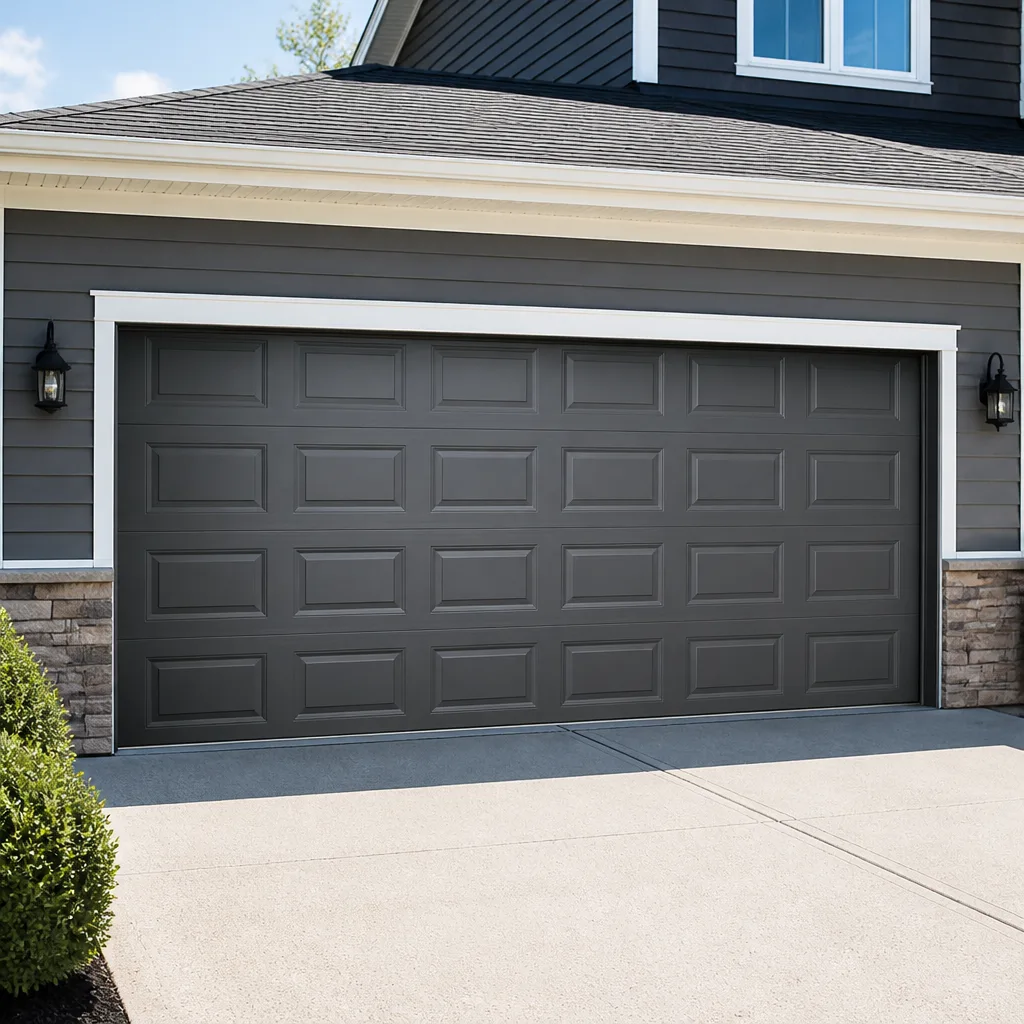 Raised-panel steel
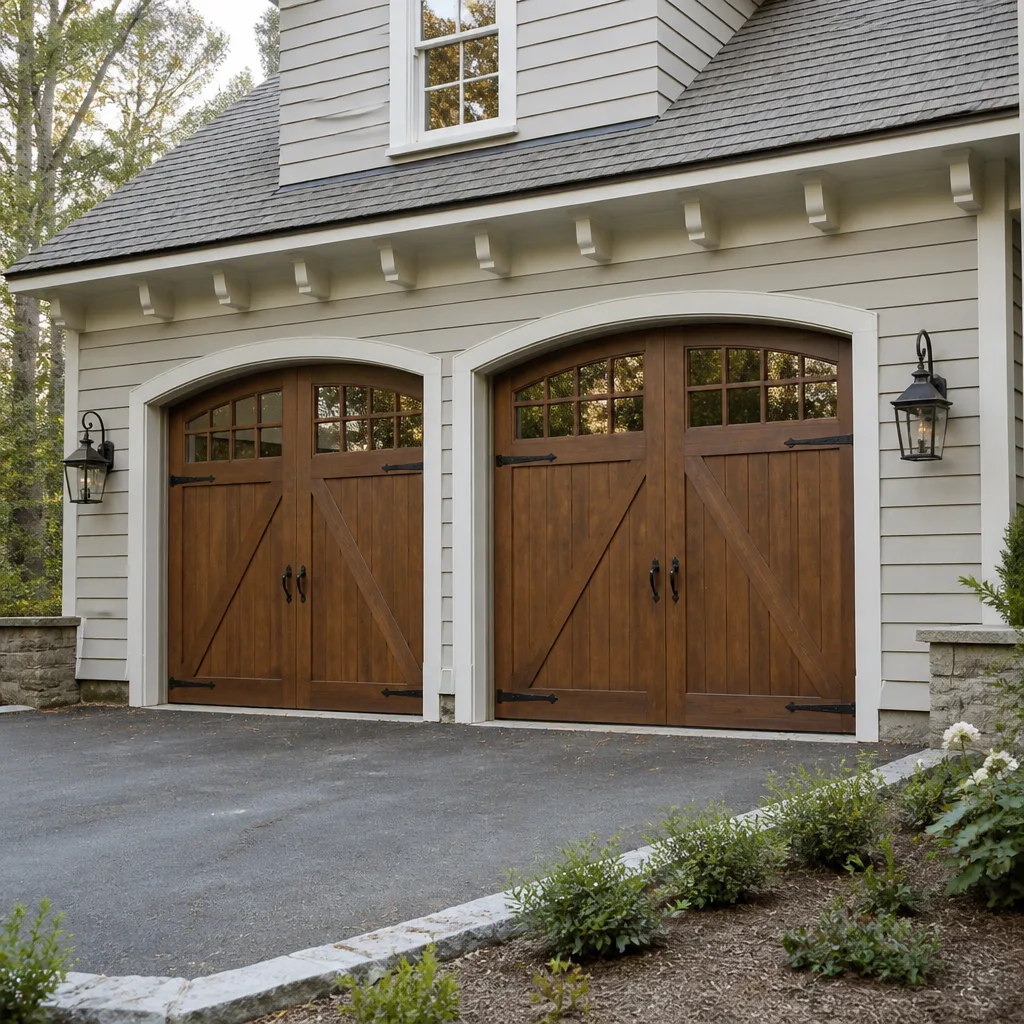 Carriage house
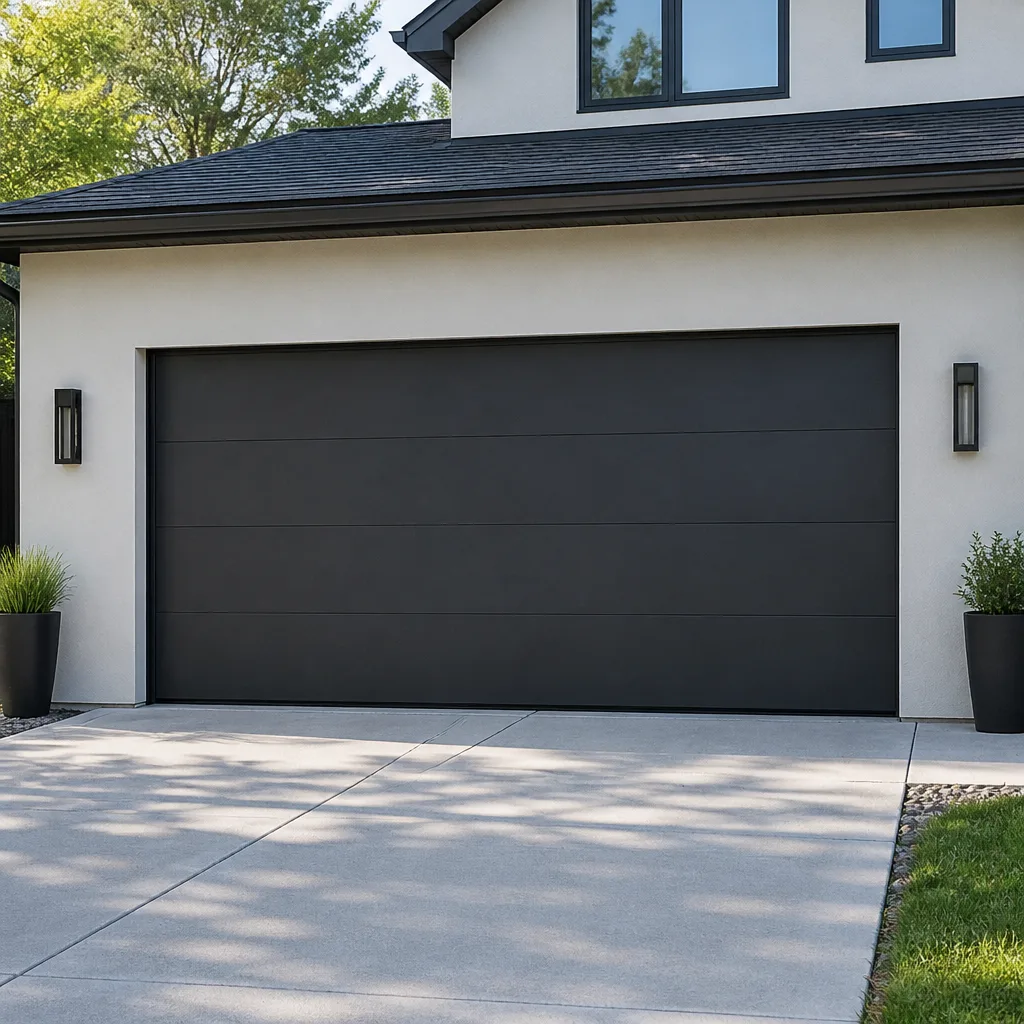 Modern flush
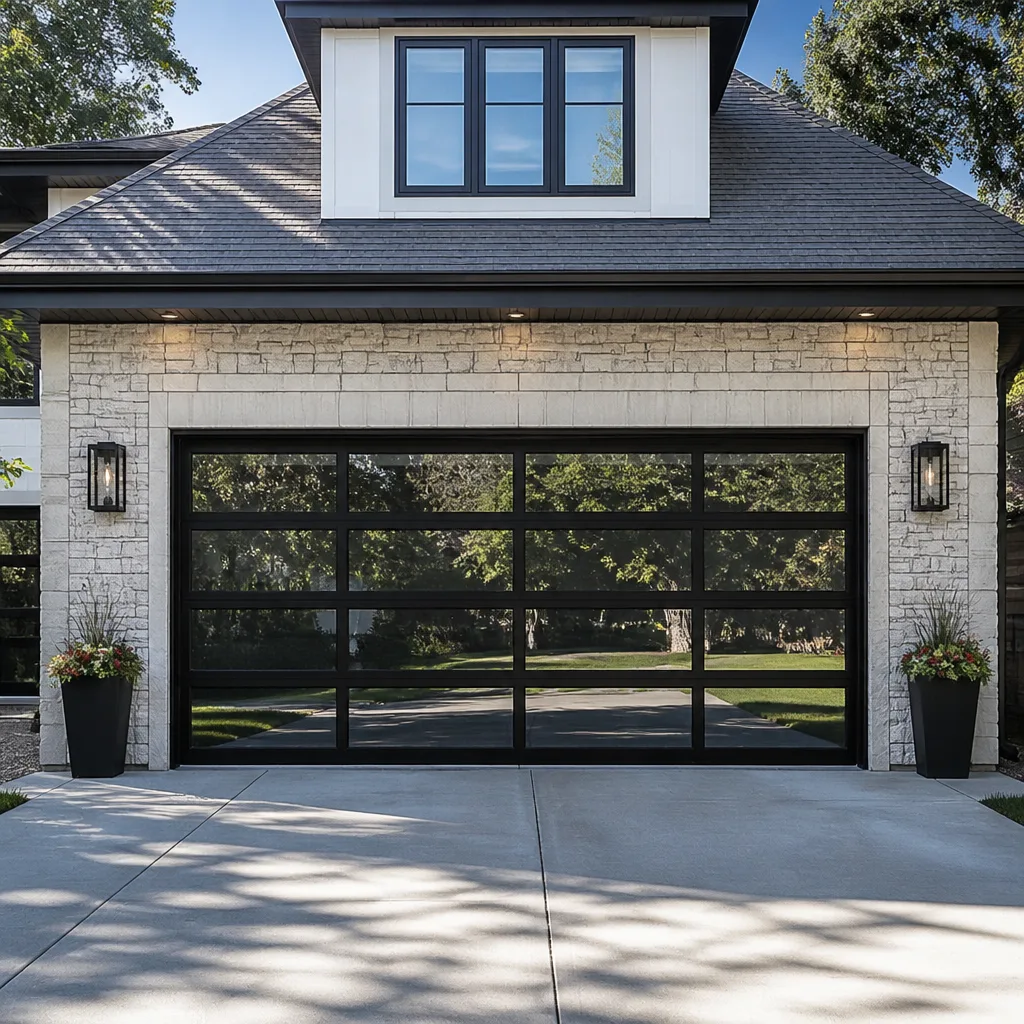 Full-view glass
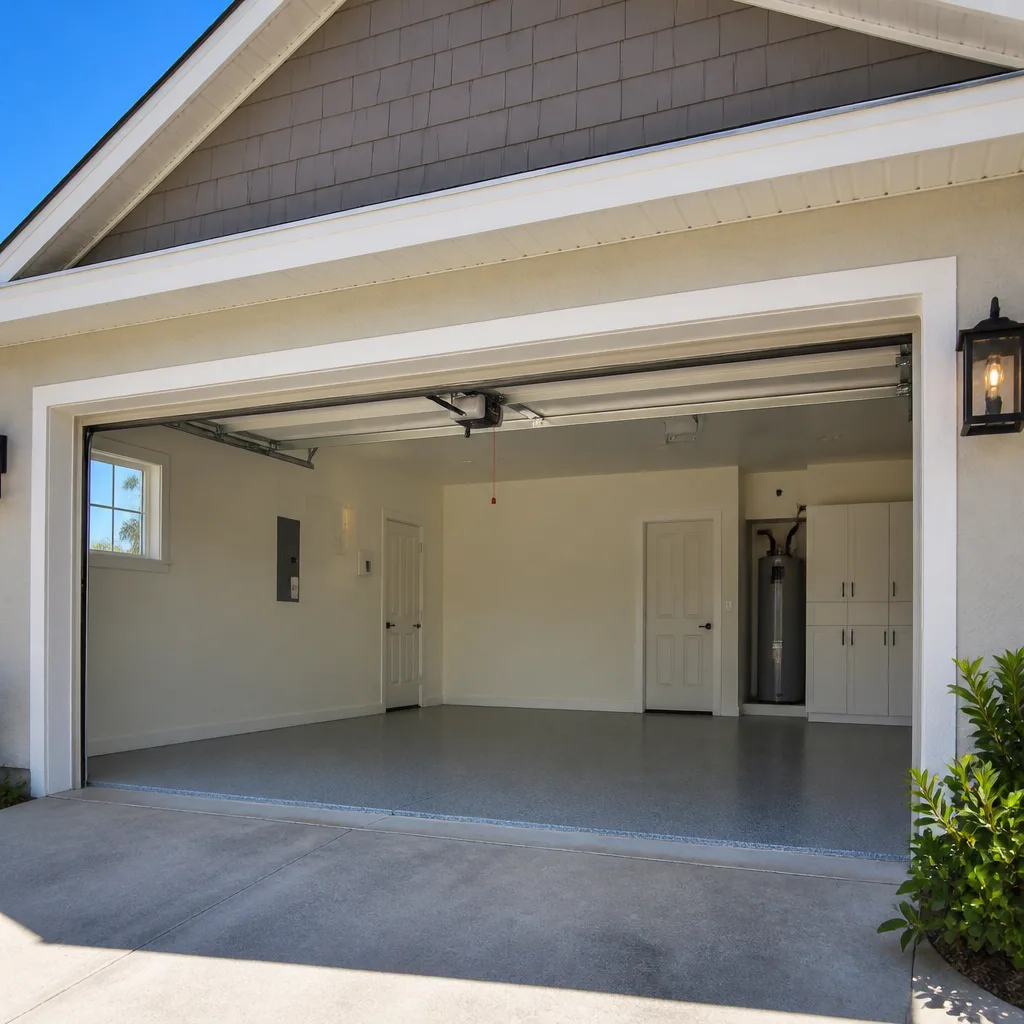 LiftMaster openers
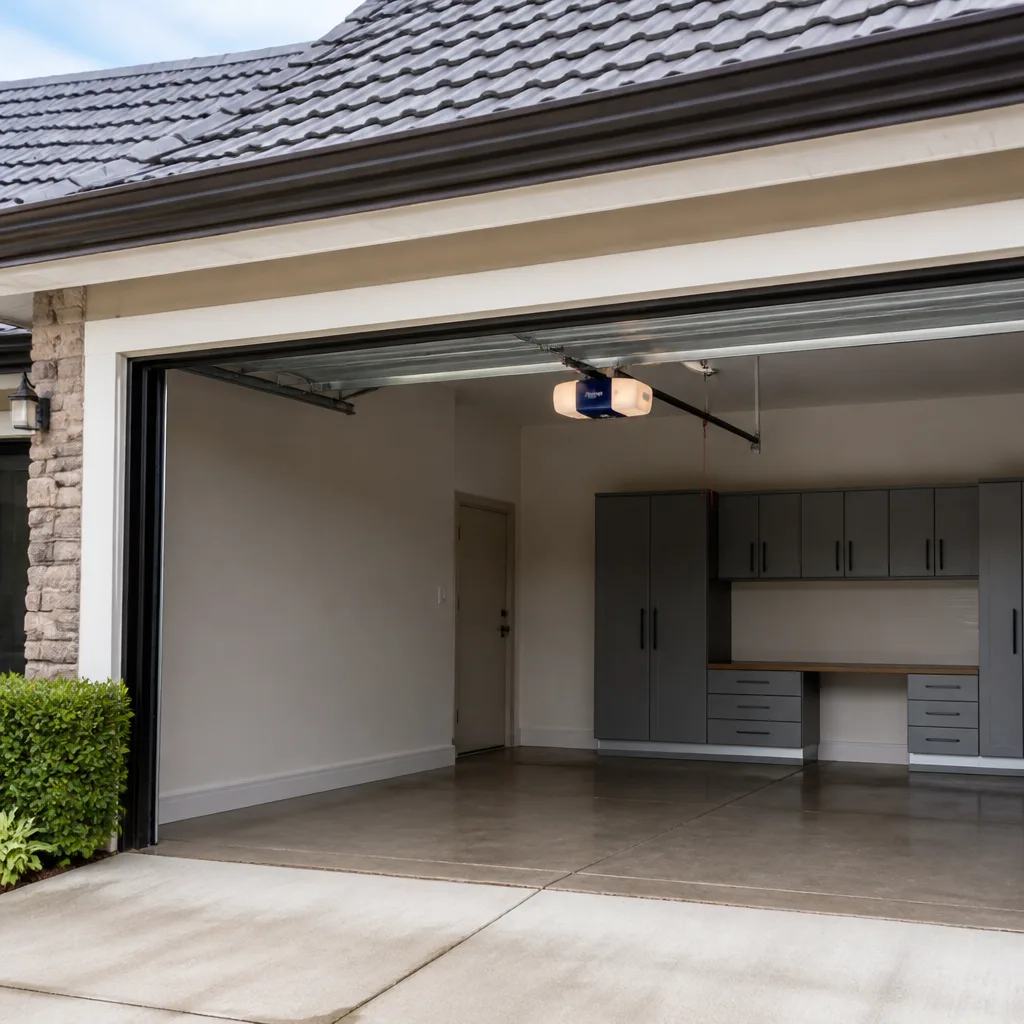 Chamberlain openers
Full 25-point door and opener safety check with every visit - springs, cables, rollers, tracks, and your LiftMaster or Chamberlain opener included
You get a price before we start. It does not change when the pro arrives.
Get your free estimateHow to Hire a Garage Door Contractor in Sugar Land: A Step-by-Step Guide
If a contractor can’t tell you off the top of their head whether your Chamberlain opener uses a chain, belt, or DC motor drive – and what that means for your specific repair – you’re talking to a generalist who learned garage doors from a YouTube video. That’s the uncomfortable truth about this trade. Garage door listings are everywhere in Fort Bend County, but most of them come from HVAC companies, handyman outfits, and remodelers who added “garage doors” to their service menu because the calls were easy to route. The door on your house is a weighted, spring-loaded mechanical system with its own diagnostic language, and hiring for it is a different exercise than hiring a plumber. In this guide we’ll walk through the technical questions that separate brand-fluent specialists from pretenders, how to read an insurance certificate the way it actually needs to be read, and how to compare quotes by labor structure instead of sticker price so you’re not the homeowner paying for upcharges three weeks after the install.
Quick Answer
To hire a garage door contractor in Sugar Land, verify four things before you sign: the contractor’s trade focus is garage doors only (not a generalist), they can name the brand and drive type on your specific opener, their insurance certificate lists garage door work as the covered classification, and the written quote separates parts from labor with warranty terms for each. If any of those four answers is fuzzy, keep calling. The lowest bid almost always hides a line item that resurfaces as an upcharge.
Styles & brands we work with
- Raised-panel steel
- Carriage house
- Modern flush
- Full-view glass
- LiftMaster openers
- Chamberlain openers
Table of Contents
- Why a Garage Door Specialist Beats a Generalist in Sugar Land
- The Brand-Fluency Questions That Reveal a Real Specialist
- How to Read a Sugar Land Contractor’s Insurance Certificate
- Red Flags in Quotes: What Low Bidders Leave Out
- Comparing Quotes by Labor Structure, Not Total Price
- What Warranty Terms on Parts vs. Labor Should Look Like
- Torsion Spring Work: Why This Isn’t a Generalist Repair
- The Step-by-Step Hiring Process
Why a Garage Door Specialist Beats a Generalist in Sugar Land
Sugar Land’s housing mix creates a specific problem for generalists. The city grew fast through the 1990s and 2000s, which means a large share of homes in neighborhoods like First Colony, Telfair, Riverstone, and New Territory are now on their second or third garage door cycle. Builders in those communities used a range of door and opener brands depending on the subdivision and the year the home was built – Clopay steel doors in some tracts, Wayne Dalton in others, with LiftMaster and Chamberlain openers appearing across the board as replacements accumulated.
A generalist sees “broken garage door” and reaches for the same three fixes every time. A specialist reads the symptom against the brand. A door that reverses a few inches off the ground on a Chamberlain belt-drive is a travel-limit or safety-sensor issue. The same symptom on an older Genie screw drive can be a stripped carriage. Those are different repairs with different parts, and a generalist will often replace the wrong one first.
Here’s what the trade focus actually buys you in a Sugar Land home:
- Faster diagnosis. A specialist has seen your brand’s failure patterns hundreds of times and asks the right questions on the phone before arriving.
- Correct parts on the first trip. No “we’ll have to come back with the right spring.”
- No upsell drift. A generalist makes margin by adding work. A specialist makes margin by doing the specific job right and getting the referral.
- Spring work done safely. Torsion springs are the one garage door repair that can genuinely injure an untrained person, and generalists avoid them or take shortcuts.
If you want a starting point, our Sugar Land Garage Door Repair Co team works on virtually every major brand and can tell you on the phone whether your door needs a repair or a replacement. That quick triage alone weeds out half the field.
The Brand-Fluency Questions That Reveal a Real Specialist
Ask these questions during the first phone call, before anyone comes to the house. The correct answers are included so you know what fluency sounds like. If a contractor hesitates, hedges, or says “we work on all of them the same way,” you’ve learned what you needed to know.
- “What brand and drive type is my opener?” Give them your model if you know it. A specialist will ask for the model number or the color of the learn button on the back of the motor housing, because LiftMaster and Chamberlain units use color-coded learn buttons that map to different radio frequencies. A generalist will just say “we’ll take a look when we get there.”
- “Chain, belt, screw, or jackshaft?” A real specialist describes the tradeoffs without being asked twice: chain drives are louder and cheaper, belt drives are quieter, screw drives are older and less common, jackshafts mount on the side wall for high-lift or low-headroom situations. The answer should include what’s in your specific home, not a brochure description.
- “What’s the difference between a torsion and an extension spring?” Torsion springs mount above the door on a shaft. Extension springs run along the horizontal tracks. Most Sugar Land homes built in the last 25 years use torsion springs, but plenty of older homes in the original Sugar Land neighborhoods still have extension springs. A specialist will tell you which you have and why it matters for the repair.
- “Can you service a Raynor or a LiftMaster wall-mount?” Brand range matters. A single-brand dealer will steer you toward their brand even when your existing system is fine. A specialist works with what’s there.
- “What would you check first on my symptoms?” Look for a specific diagnostic order – balance test, spring tension check, sensor alignment, travel limits, then opener logic board. Vague answers (“we’ll run diagnostics”) signal a generalist.
- “Do you do the spring work yourself or subcontract it?” The answer should be immediate and confident. Spring work is dangerous and requires training, dedicated winding bars, and the right safety discipline. Subcontracting it means the person on your door isn’t the person who quoted you.
We’re a good example of what the answer should look like. Our technicians work across eight major brands – LiftMaster, Chamberlain, Genie, Clopay, Amarr, Wayne Dalton, Craftsman, and Raynor – so the diagnostic path follows the door, not the brand the company prefers to sell. If you’re stuck on a diagnosis, our garage door opener repair page covers the symptoms by brand.
How to Read a Sugar Land Contractor’s Insurance Certificate
“Licensed and insured” is the phrase every contractor uses, and it means almost nothing on its own. Ask for a Certificate of Insurance (COI) and read it against three things.
First, the general liability classification. Look for the classification description on the certificate. General liability policies carry classification codes tied to the type of work being done, and garage door installation and repair falls under a specific classification. If the certificate only lists “carpentry,” “handyman services,” or “HVAC,” your spring repair may not be covered at all if something goes wrong – and the contractor will be the one to find out when they file the claim.
Second, the workers’ compensation line. In Texas, workers’ comp is not required for most small employers, which means a contractor with no workers’ comp policy is asking you, the homeowner, to absorb the risk if a technician is injured on your property. Ask for the workers’ comp certificate separately. If there isn’t one, ask how the contractor handles technician injuries, and get the answer in writing.
Third, the certificate holder. Ask to be listed as the certificate holder or ask that your name appear on the COI. This forces the contractor’s insurance agent to generate a fresh certificate, which confirms the policy is active and the coverage hasn’t lapsed. A contractor who can’t produce a same-week certificate is worth a second look.
Specific to torsion spring work: ask directly whether the liability policy covers garage door spring replacement. If the answer is vague, that’s a red flag. On our end, spring work is handled by trained specialists with the right tools, because it’s the one repair in this trade that’s genuinely dangerous. For details, see our garage door spring repair page.
Red Flags in Quotes: What Low Bidders Leave Out
Low bids come from missing line items, not from better efficiency. Here’s what disappears from a cheap quote and reappears as an upcharge once the technician is standing in your driveway.
- Spring winding bars and safety cables. A quote for a torsion spring replacement that doesn’t list the winding bars as part of the labor is a quote that assumes you supply the dangerous part of the work.
- New center bearing plate and end bearing plates. When a specialist replaces a torsion spring on a Sugar Land door that’s been in service for 15-plus years, the bearing plates are usually worn and get replaced at the same time. A low bid leaves them out and quotes them as an add-on.
- Drums and cables. Cables aren’t springs. A quote that says “spring replacement” without specifying whether the cables are included is setting up a call you don’t want to have later.
- Opener labor for the second visit. If the door and opener both need work, a low bid may cover only the door on visit one and quote opener labor separately as a “return trip.” One call should cover the full system.
- Disposal. Hauling the old door or spring away costs money. If it’s not on the quote, it’s either coming off your curb (in Sugar Land that’s a bulky-item pickup call to the city) or showing up as a fee.
- Travel or “diagnostic” fees. A specialist quotes the repair. A generalist quotes a diagnostic fee plus a repair, because they need to learn the system on your dime.
- Permit line. Some replacements require a permit depending on your HOA and the scope. A reputable quote will tell you in advance whether a permit is needed. Ask your city’s building department about permit requirements for your specific scope before signing.
Our advice: ask every bidder to itemize parts, labor, disposal, and any permit line separately. If the contractor can’t or won’t, the price is the least of your problems. Our garage door repair quoting process does this by default, which makes comparison easy.
Comparing Quotes by Labor Structure, Not Total Price
Two quotes can total within $50 of each other and represent completely different quality. The way to see the difference is to compare the labor structure, not the top-line number. Here’s a quick comparison table you can use to score each bidder.
- Labor hours estimated. A spring replacement is typically a one-visit job. A new door install is usually a half-day to a full day depending on the size and door type. If the hours don’t match the scope, the price is either padded or the scope is underbid.
- Number of technicians. Torsion spring work is often a one-technician job. Full door replacement usually takes two. A quote without a headcount is a quote that can’t be compared.
- Parts mark-up ratio. A reasonable quote shows parts and labor as separate lines. A bundled single price hides the mark-up, and the mark-up is where the “affordable” contractor makes the difference back.
- Same-day vs. scheduled. Repair work – broken spring, opener failure, stuck door – can often be done same day. New door orders, panel replacements, and full reinstalls are measured and scheduled because parts have to be ordered. If a quote promises same-day on a full install, ask how.
- Warranty length on labor. Labor warranties usually run shorter than parts warranties. A quote that lists a generous parts warranty but a 30-day labor term is quietly telling you where the risk sits.
- Callback commitment in writing. Ask what happens if a repair fails within 30 days. The answer should be “we come back at no charge” and it should be in the quote text.
We’ll also say this: “family-owned” and “5-star reviews” are table stakes. Every contractor in Sugar Land claims both. What actually signals expertise is a written quote you can read line by line and a technician who diagnoses the door correctly the first time. Those two things show up on every job; the marketing language doesn’t.
What Warranty Terms on Parts vs. Labor Should Look Like
Parts warranties and labor warranties are separate instruments, and the gap between them is where homeowners get blindsided. Here’s what to look for on each.
Parts warranty. Springs, openers, and panels carry manufacturer warranties that vary by brand and product line. A LiftMaster or Chamberlain opener typically carries a manufacturer warranty on the motor and electronics. A Clopay or Amarr steel door carries a finish and structural warranty that differs by panel style and gauge. The parts warranty is the manufacturer’s, and your contractor should be able to tell you the specific terms for the part going into your door – not just “it’s warrantied.”
Labor warranty. This is the contractor’s own commitment. Ask for it in writing on the quote. A reasonable labor term covers the specific repair you’re paying for, for a period long enough to catch a bad install – not so short that a spring that fails in 45 days is “outside the labor window.” If you have to ask what the labor term is, the quote is incomplete.
The overlap question. Ask the contractor what happens if a part fails within the labor window: does the manufacturer replace the part and the contractor charge you labor to reinstall it? On a $30 part, that’s fine. On a $300 opener, the labor cost adds up. Get the answer in writing before you sign.
Combined with a written estimate that lists every line item, a clear warranty structure is the single best proof you’re dealing with a specialist. Generic contractors skip it because generalists don’t get called back on warranty work. Specialists do, and they plan for it.
Torsion Spring Work: Why This Isn’t a Generalist Repair
Torsion springs store enormous energy. When one fails during a repair, or when a homeowner tries to wind one without the right training, the result can be serious injury or worse. This is the single repair in this trade that genuinely shouldn’t be attempted outside a trained specialist, and it’s the repair most commonly underbid by generalists because they don’t want to price the risk.
Here’s what the safety profile actually looks like for a homeowner in Sugar Land:
- Never wind a spring yourself. Even a partially unwound torsion spring can cause serious injury. Do not attempt to adjust, tighten, or replace one.
- Never cut a spring. A tensioned spring is not a piece of wire you can cut with a hacksaw.
- Do not let a generalist do it. Ask every contractor whether they do torsion spring work themselves. Vague answers mean they’ll sub it out or try it untrained.
- Signs you need spring service now. A loud bang from the garage, a door that won’t lift more than a few inches, a door that feels extremely heavy when you pull the manual release, or visible separation in the spring coil.
- Opener follow-on risk. A broken spring left in place stresses the opener motor, which can fail next. Fix the spring and the opener’s workload resets.
For a safe repair, call a specialist. Our team handles spring work with trained technicians and proper winding bars, and we’ll tell you on the phone whether your symptoms point to the spring or somewhere else in the system.
The Step-by-Step Hiring Process
Here’s the exact sequence that works for Sugar Land homeowners hiring for any garage door repair or replacement.
- Identify the brand and model on your opener and door. Look at the back of the opener motor for the model number and the learn-button color. Look at the door’s bottom panel edge for a manufacturer label. Having this ready will save time on every phone call.
- Call three contractors, not one. Ask each the brand-fluency questions from the section above. Note whether the answers are specific or generic.
- Request a written quote with separated line items. Parts, labor, disposal, and permit line (if applicable) should each be listed. Torsion spring quotes should specify whether bearing plates and cables are included.
- Ask for the Certificate of Insurance. Request it in writing, then read the classification description and confirm the workers’ comp status.
- Confirm the warranty terms in writing. Parts warranty from the manufacturer, labor warranty from the contractor, and the overlap question answered.
- Confirm same-day or scheduled status. Repair work can often be done same day. Install work is scheduled after measurement and ordering. Get the correct timeline in writing before any deposit.
- Verify the final price in writing. The written estimate sets the price. Any addition after arrival should be quoted and approved in writing before the work continues.
One more Sugar Land-specific note: check your HOA’s replacement approval process before ordering a new door. Many of the master-planned neighborhoods here have architectural review committees that require approval on door style and color before install. A good contractor will ask you about the HOA on the first call, which is another signal you’re dealing with a specialist.
Common Mistakes to Avoid
- Hiring the generalist with the lowest bid. Low bids come from missing line items. The bid that looks $150 cheaper often grows to $400 more by the end of the job.
- Believing “licensed and insured” without seeing the certificate. Ask for the COI and read the classification description. If it doesn’t cover garage door work, the phrase is decoration.
- Skipping the brand question. A contractor who can’t tell you whether your Chamberlain is chain, belt, or DC drive is guessing on the repair.
- Letting a generalist touch a torsion spring. This is the repair with real injury risk. Confirm the contractor does spring work in-house.
- Accepting a bundled top-line price. A quote with no separated parts and labor can’t be compared and usually hides the mark-up.
- Ignoring HOA rules before ordering. Sugar Land neighborhoods like Riverstone and Telfair have architectural review committees. Ordering the wrong door means replacing it again.
- Assuming same-day on installs. Repair work is often same-day. New replacements are measured, ordered, and scheduled. If a quote promises same-day on a new door, ask how.
See the difference
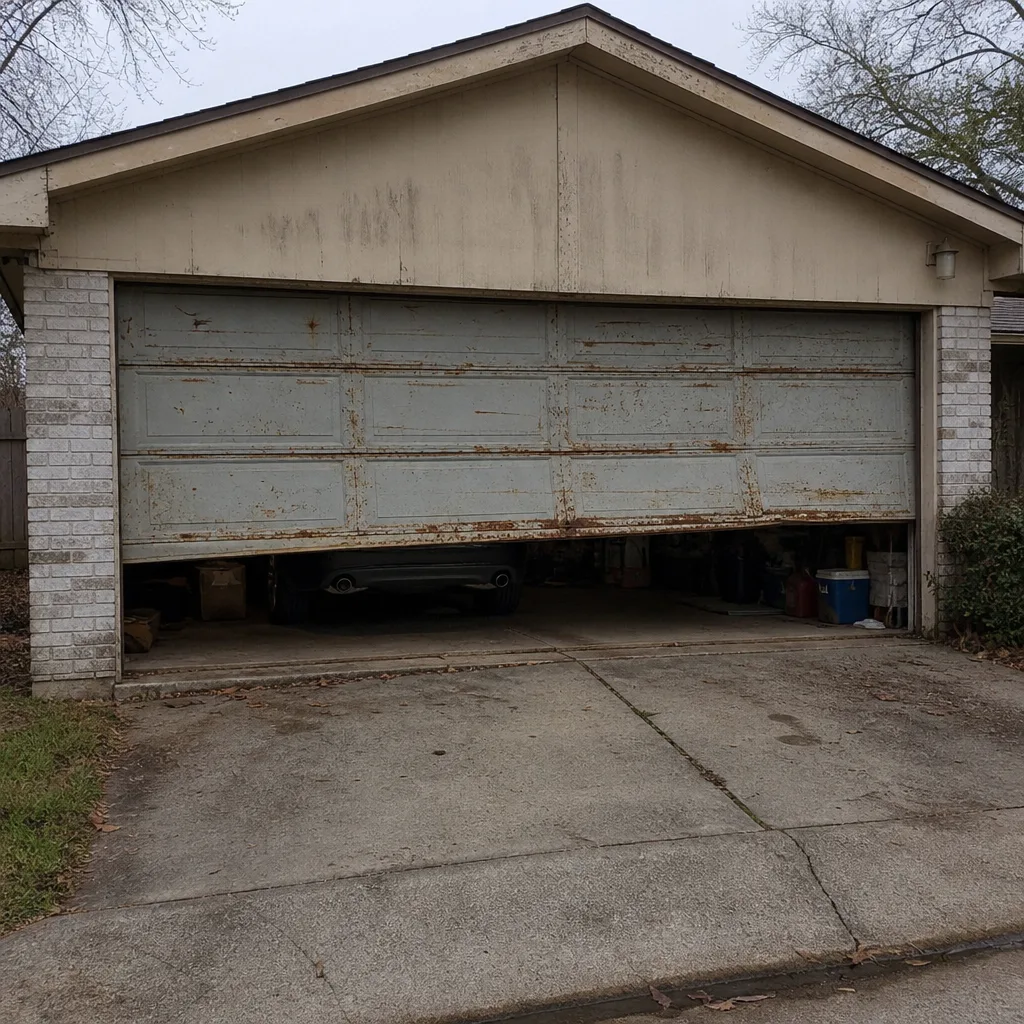 Before
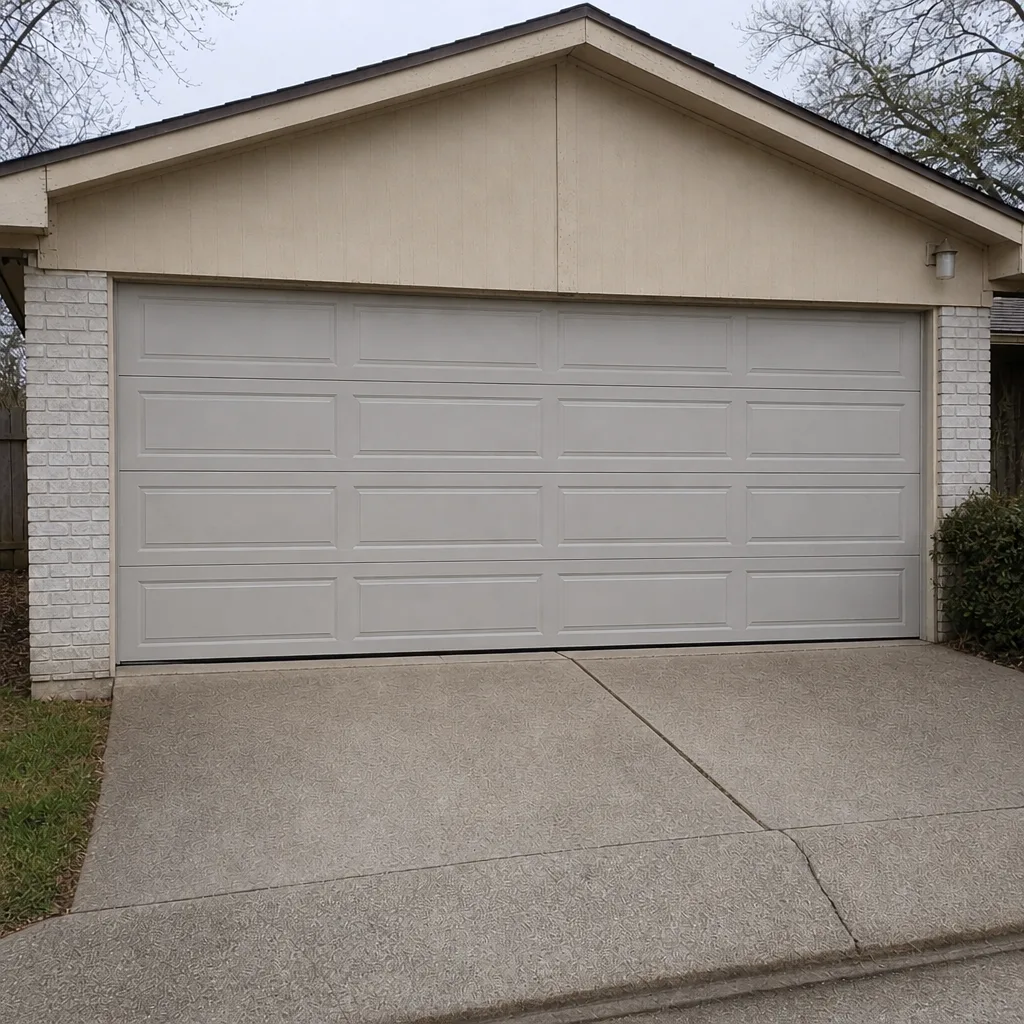 After
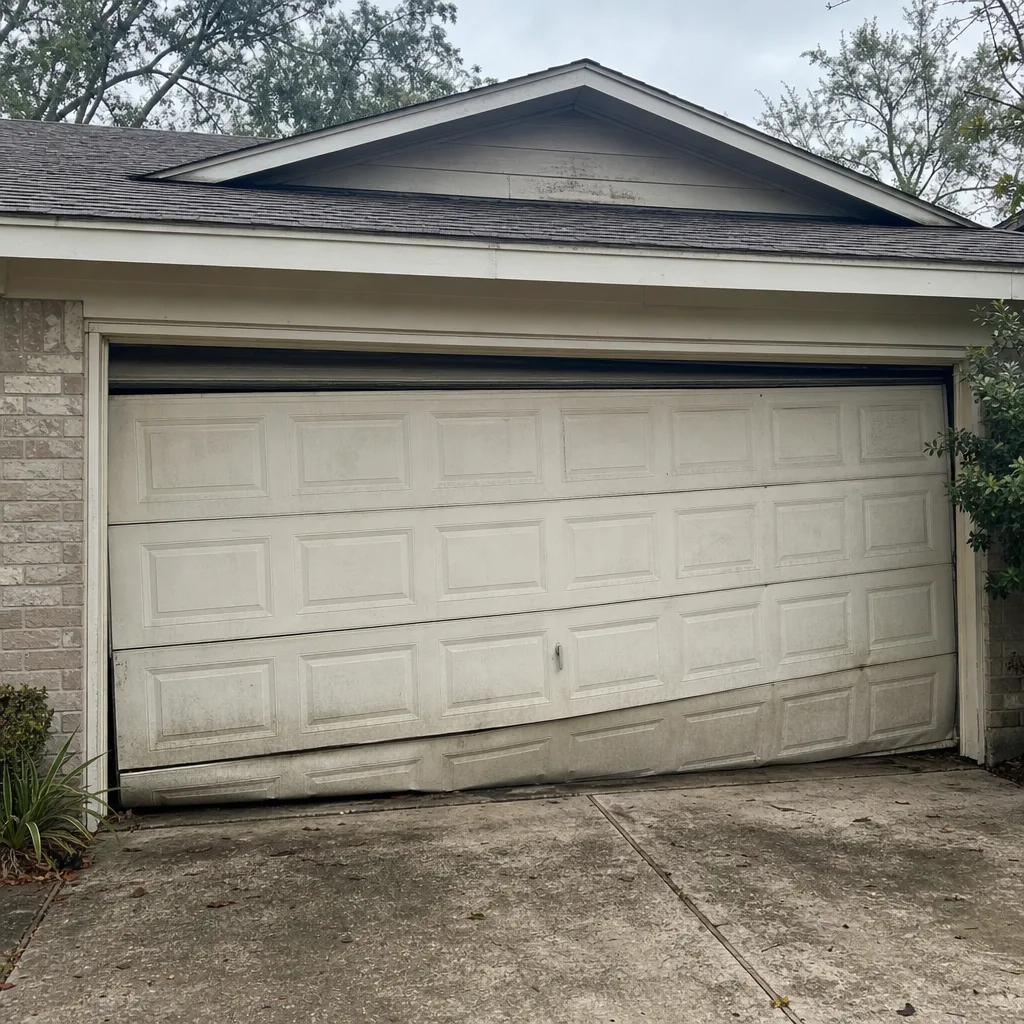 Before
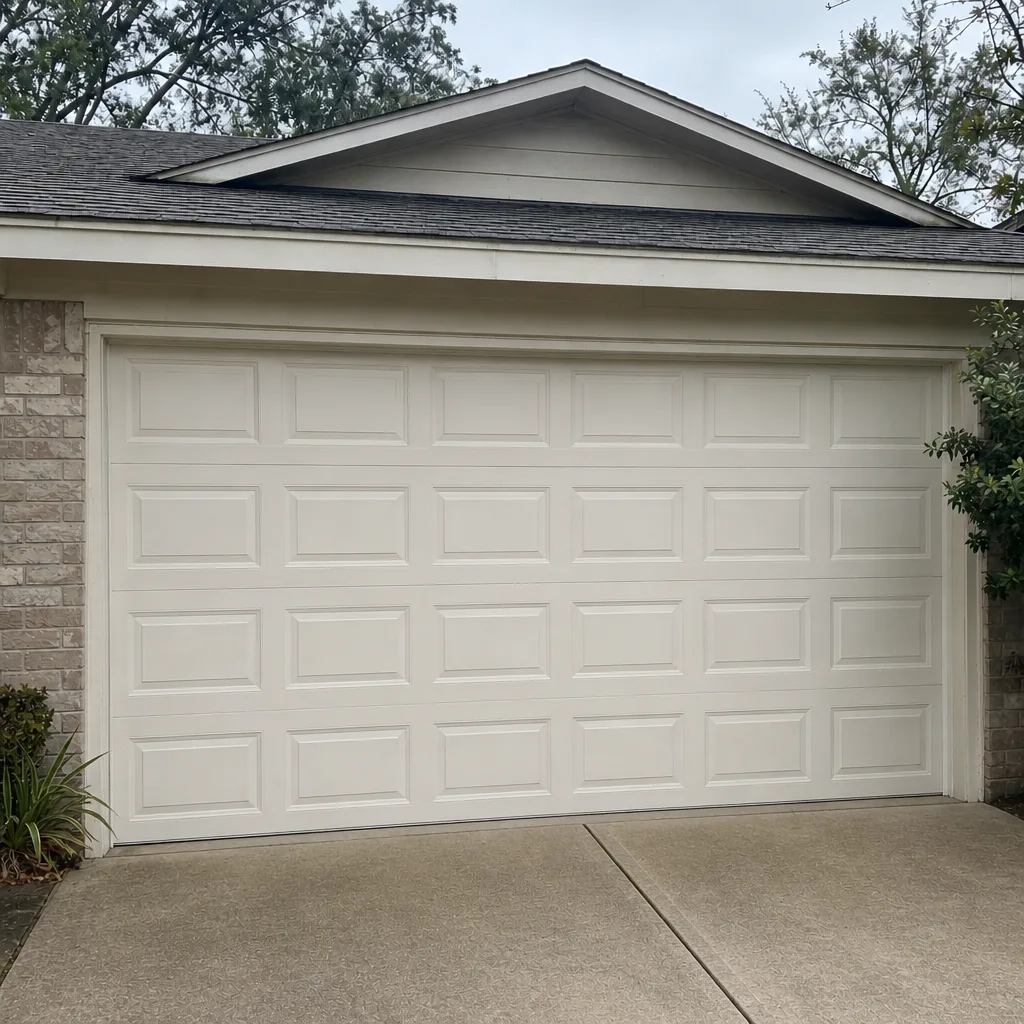 After
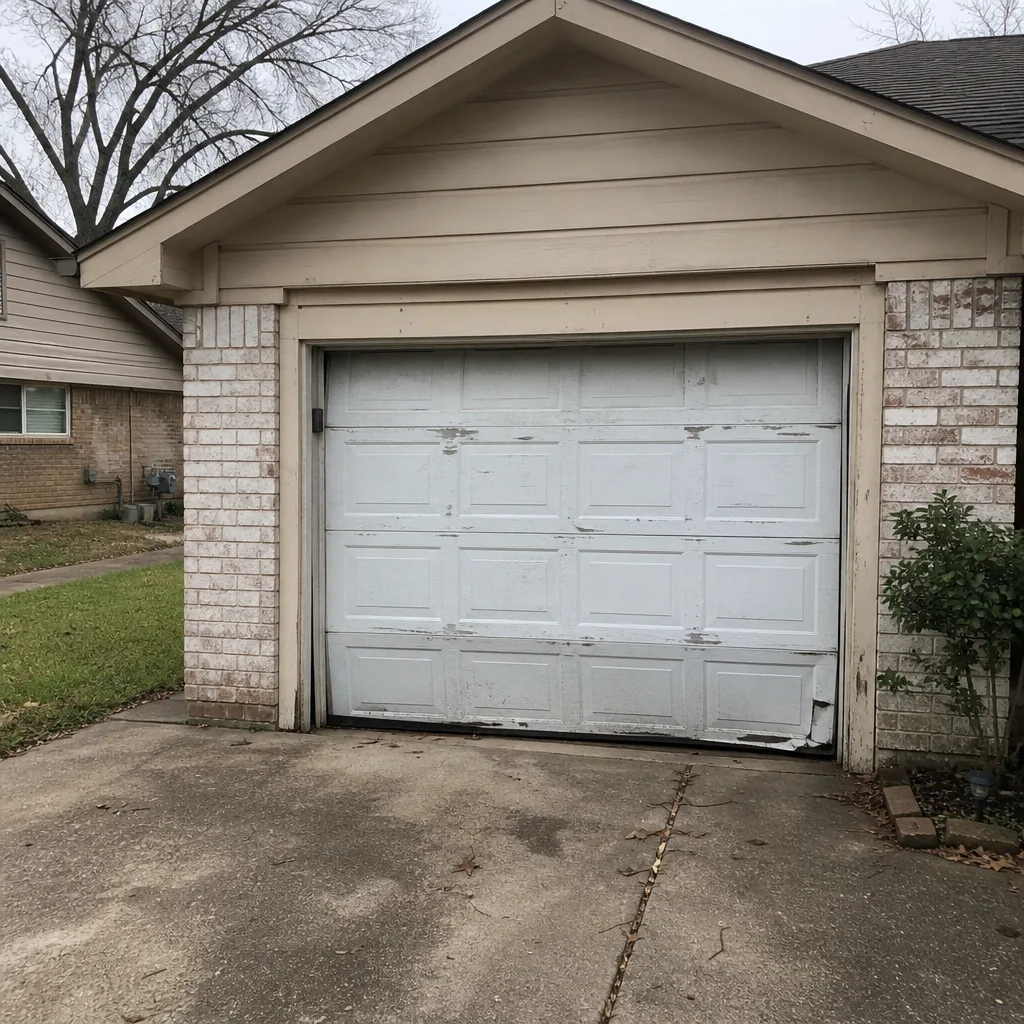 Before
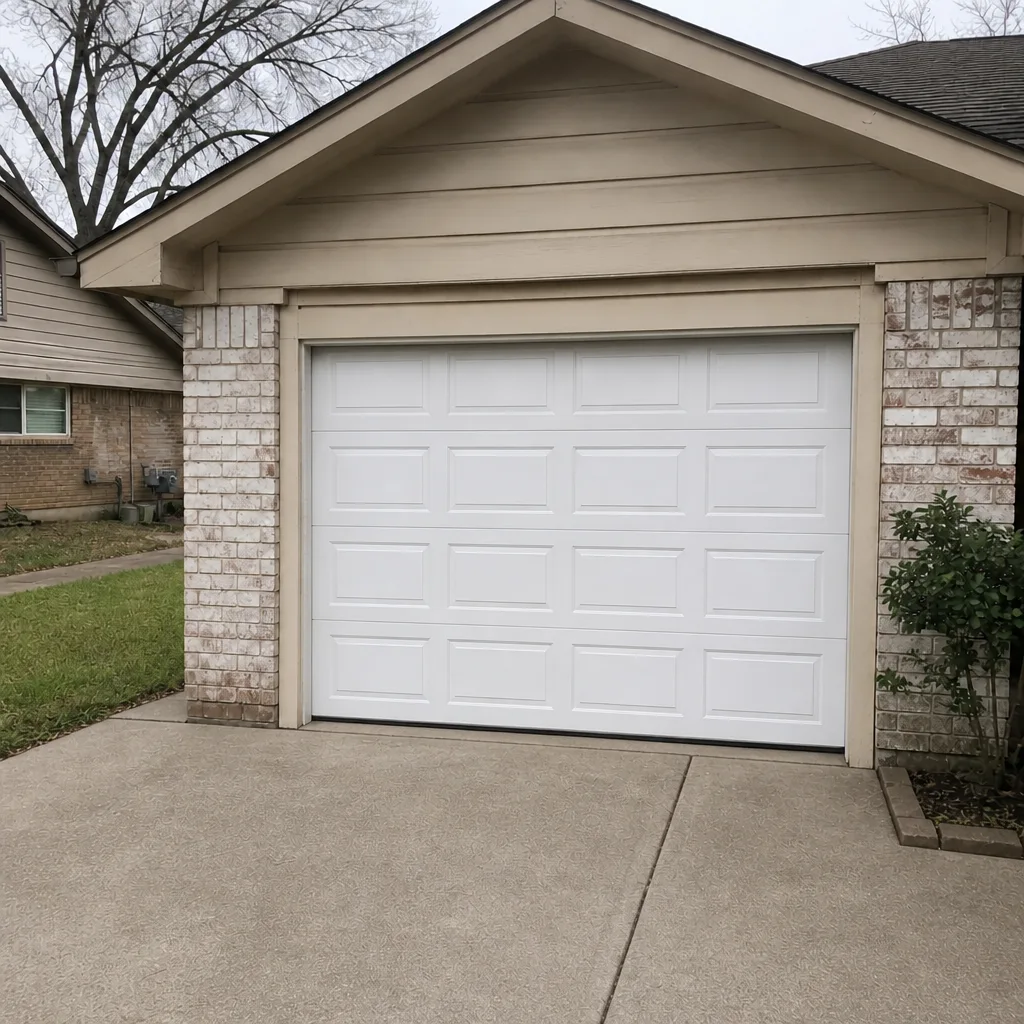 After
When to Call a Professional
Some garage door problems can wait for a scheduled visit. Most can’t. Call a professional right away if the door won’t close fully, reverses on its own, or shows visible spring separation. Call if you hear a loud bang from the garage and the door won’t lift more than a few inches. Call if the opener runs but the door doesn’t move – that’s usually a stripped carriage or a broken spring, and either one means the door is no longer being held safely. Call if the door is off-track, dragging on one side, or has a visibly bent panel after a bump. Also call if the door was installed before you moved in and you don’t know the last time it was serviced. Sugar Land Garage Door Repair Co offers free estimates in Sugar Land – call (833) 509-3010 and we’ll help you sort repair from replacement on the first call.
Frequently Asked Questions
Ask three phone-call questions first: what brand and drive type is your opener, do they do torsion spring work in-house, and can they send a written itemized quote with a Certificate of Insurance. A specialist answers all three without hesitating. A generalist stumbles on the first one. Call (833) 509-3010 for a free estimate if you want to do a fluency check live.
Texas doesn’t license garage door contractors as a separate trade, so “licensed” in this industry usually means a general contractor license or a business registration. The more important document is the Certificate of Insurance with the correct classification for garage door work, plus a workers’ comp certificate. Ask for both in writing and confirm the description on the policy matches the work being done.
Pricing varies by spring type, door weight, and whether bearing plates and cables are being replaced at the same time. Ask for a separated line-item quote (parts, labor, disposal) and compare three bids on labor structure, not total price. The written estimate sets the price. Call (833) 509-3010 for an exact quote – estimates are free.
The most common causes are a misaligned safety sensor, mis-set travel limits, or a broken spring on one side of the door. Start by checking the safety sensors at the bottom of the tracks – they should have a solid light on both sides, not a blinking one. If the sensors are fine, it’s a spring or opener issue and needs a specialist. Call (833) 509-3010 for a free estimate.
A specialist should be fluent in the major brands you’ll find in Sugar Land homes: Raynor, LiftMaster, Chamberlain, Genie, Clopay, Amarr, Wayne Dalton, and Craftsman. If a contractor only services one brand, they’ll push you toward that brand even when your existing system is fine. Ask which brands they work on before you commit to a visit.
The local professionals we connect you with are licensed and insured as their state requires, and we recommend asking for both documents in writing before any work starts. Confirm the classification on the general liability certificate specifically covers garage door installation and repair. The written quote should state the price and warranty terms before any work begins. Call (833) 509-3010 for a free estimate.
The Bottom Line
Hiring right for a garage door in Sugar Land comes down to trade focus, brand fluency, and a written quote you can read line by line. Filter out the generalists in the first phone call by asking which brand and drive type you have and whether they do torsion spring work in-house. Read the Certificate of Insurance for classification coverage and workers’ comp. Compare quotes by labor structure, parts mark-up, and warranty terms instead of total price. Skip the low bidder whose quote is missing bearing plates, cables, and disposal – those costs resurface. And remember that repair work is often same-day while new installs are measured and scheduled, because that difference tells you whether the contractor is being straight with you. If you want a free estimate from a specialist team that works on virtually every major brand, call Sugar Land Garage Door Repair Co at (833) 509-3010. We’ll diagnose the door correctly the first time and put the price in writing before any work begins.
Written by the team at Sugar Land Garage Door Repair Co.