Last updated November 21, 2026
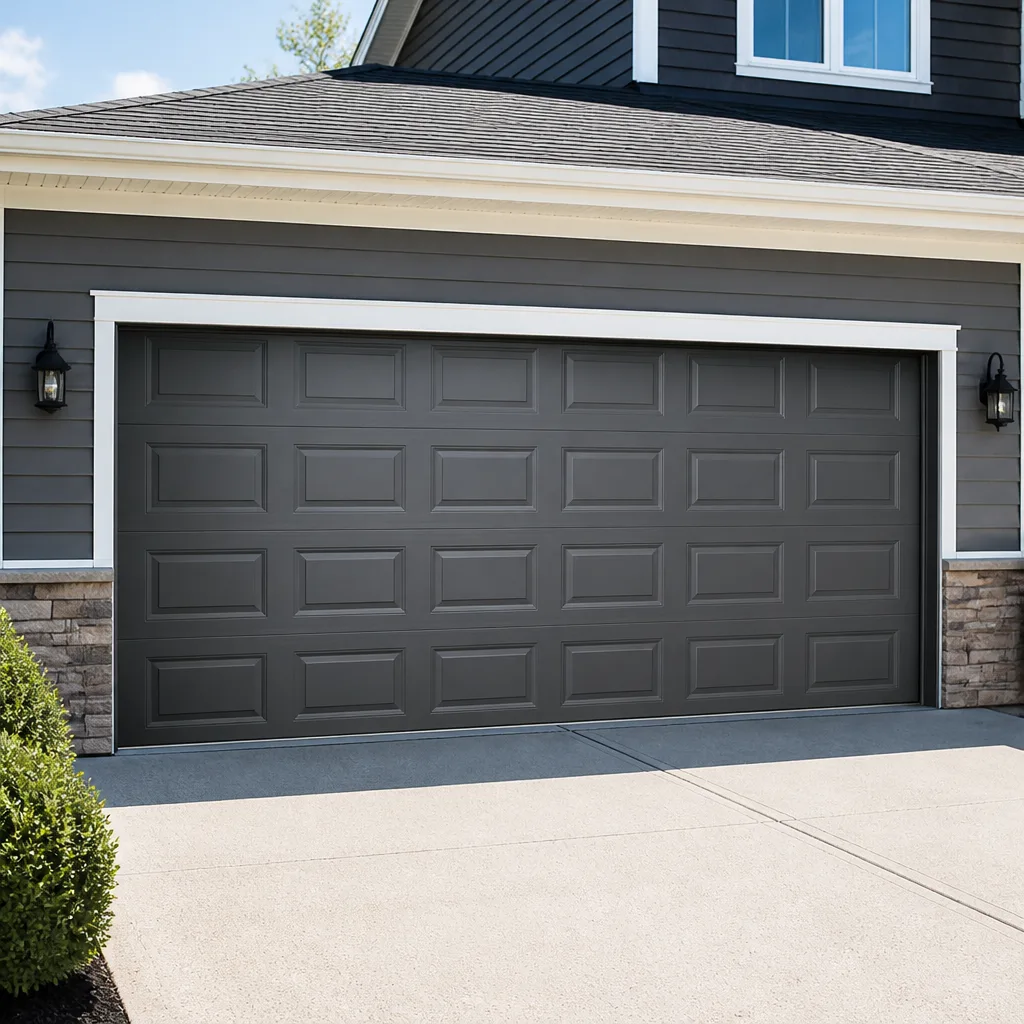 Raised-panel steel
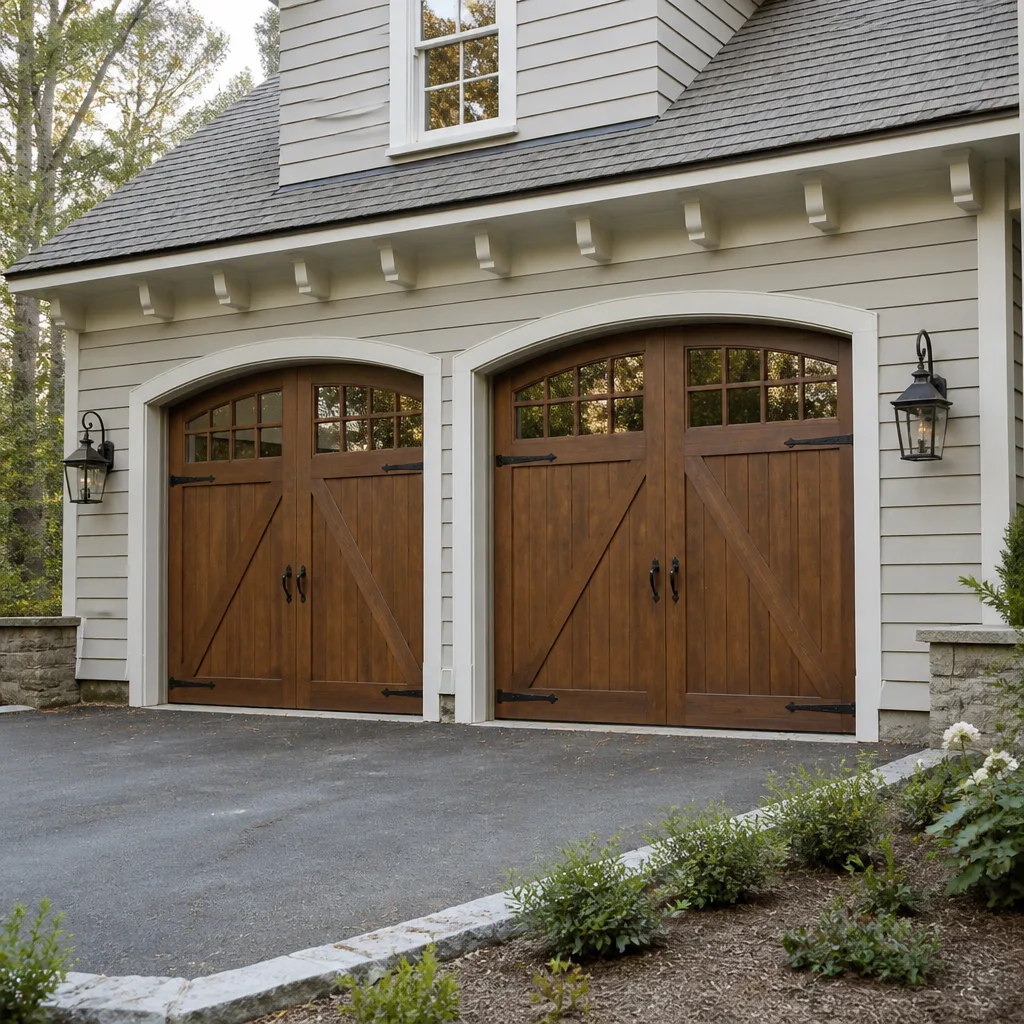 Carriage house
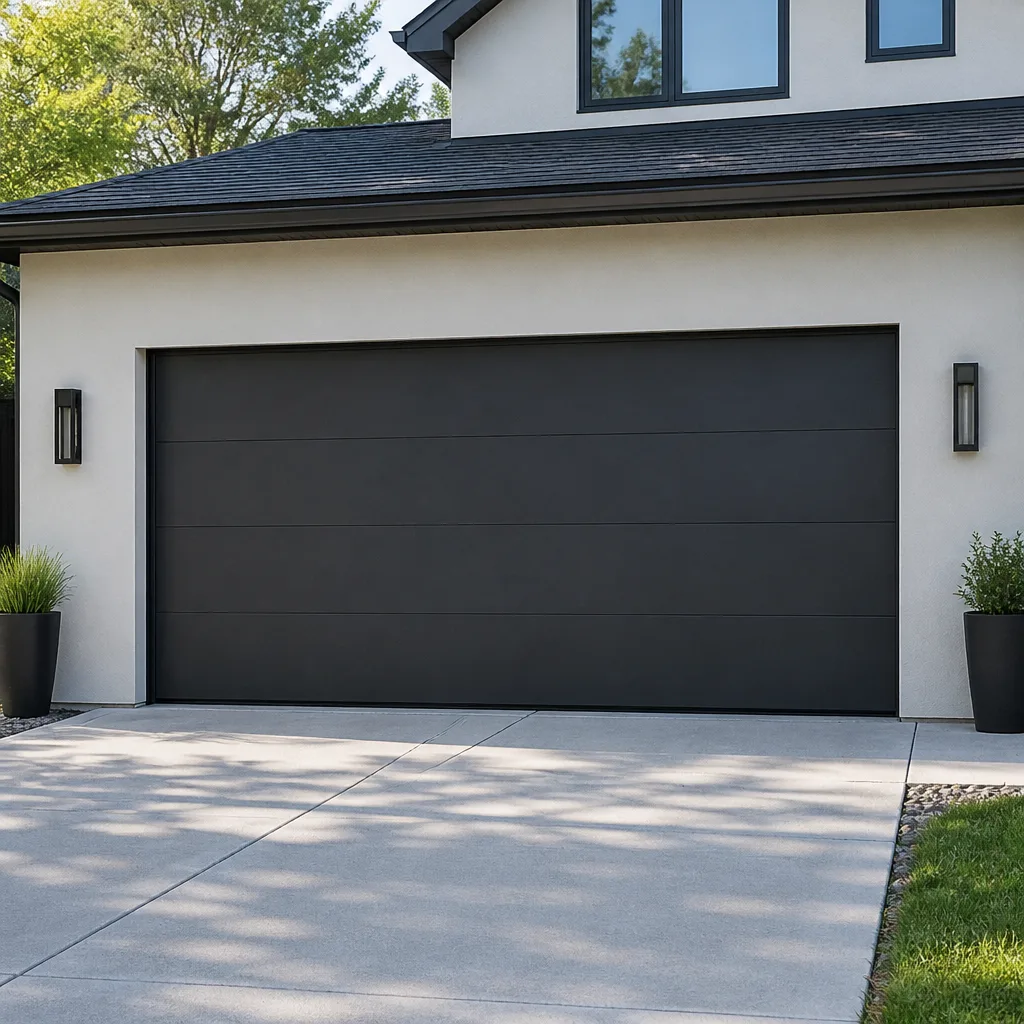 Modern flush
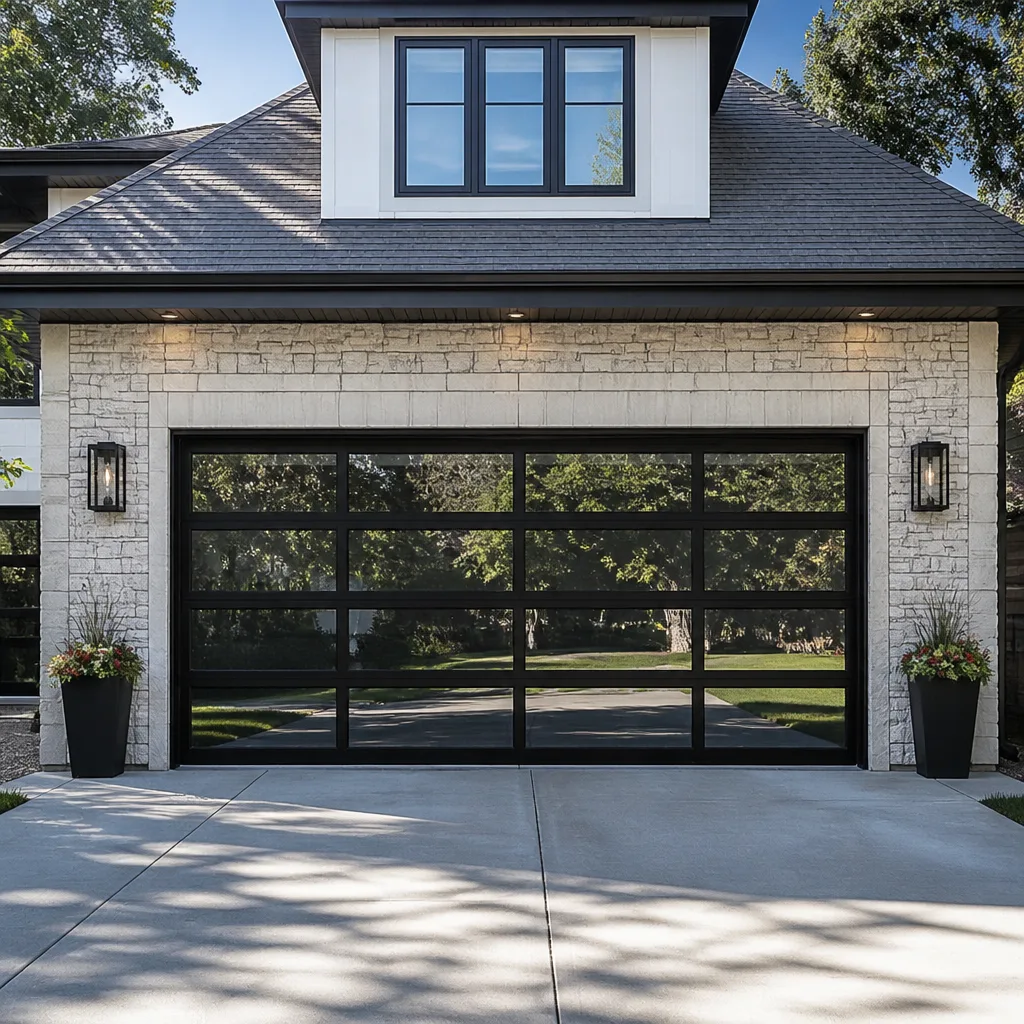 Full-view glass
 LiftMaster openers
 Chamberlain openers
Full 25-point door and opener safety check with every visit - springs, cables, rollers, tracks, and your LiftMaster or Chamberlain opener included
You get a price before we start. It does not change when the pro arrives.
Get your free estimateGarage Door Repair Maintenance Checklist for Sugar Land Homeowners
Ask anyone who fixes garage doors for a living what floods in after a storm, and they will not tell you it is snapped springs. It is doors that open fine but refuse to close. The opener runs. The chain moves. Then the door reverses a few inches off the ground and stays open, leaving a whole house exposed. Nine times out of ten the cause is dirty or shifted safety sensors, which take less than two minutes a month to check and roughly the same amount of neglect to fail. Sugar Land humidity makes it worse, because rust creeps into sensor brackets and nudges them out of line. This guide gives you a maintenance checklist built around the failures we get called about most, sequenced by frequency rather than convenience.
Quick Answer
The highest-value garage door maintenance in Sugar Land is monthly safety-sensor alignment, heat-appropriate lubrication on hinges and rollers, a quarterly visual spring inspection (look only, never touch), and seal replacement driven by UV wear rather than calendar age. Handling those four items consistently prevents the bulk of failures we see, and anything involving the torsion springs themselves belongs with a trained technician. Below, each task is laid out with what to look for and how often to do it.
Styles & brands we work with
- Raised-panel steel
- Carriage house
- Modern flush
- Full-view glass
- LiftMaster openers
- Chamberlain openers
Table of Contents
- Monthly: The Sensor Alignment Check That Prevents the Storm Season Call
- Lubrication for Sugar Land Heat: Why White Lithium Fails in July
- Quarterly Spring Inspection: What You Can Safely Look For
- Weather Seals and UV: A Replacement Timeline for South-Facing Garages
- The Pre-Storm Checklist for Gulf Coast Tropical Systems
- Opener and Safety Reverse Testing
- Rust, Rollers, and Tracks: The Hardware Under the Humidity
- A Year-Round Garage Door Maintenance Calendar for Sugar Land
Monthly: The Sensor Alignment Check That Prevents the Storm Season Call
Safety sensors sit a few inches off the floor on each side of the door opening. One shoots an infrared beam, the other receives it. If the beam breaks or the lenses lose their view of each other, the logic board refuses to close the door and sends it back up. That design is there to protect anything in the path, and it works. The trouble starts when the beam is interrupted by something invisible: a film of grime, a spiderweb, or a bracket that has drifted a quarter inch because its mount is quietly rusting.
Here is the monthly protocol we recommend for any home with children, pets, or a daily driveway routine:
- Disconnect the opener from the door, either with the release cord or by switching the wall control to lock.
- Wipe each lens with a soft dry cloth. Do not spray cleaner directly into the sensor housing.
- Look at the indicator lights on each unit. A solid light on both sides means they can see each other. A flickering or dark light is your signal.
- Loosen the mounting wing nut by hand and nudge the sensor until both lights are steady.
- Check the brackets for orange-brown rust crust, especially where the metal meets the concrete. Wipe and re-inspect.
- Run the door down and pass a hand through the beam to confirm it reverses cleanly.
In Sugar Land, homes with garages facing open lawn or shrubbery pick up more moisture in the bracket area, and rust loosens those mounts faster than most homeowners expect. A sensor that’s been bumped by a garbage can or a bike also needs re-aiming. That check takes about ninety seconds, and it is the difference between a door that seals for a storm and one that doesn’t. If a sensor refuses to stay aligned no matter how often you reset it, the wiring or the board is the next suspect, and that is the point to bring in a technician for garage door opener repair.
Lubrication for Sugar Land Heat: Why White Lithium Fails in July
The typical garage door maintenance checklist says “apply white lithium grease” and leaves it there. In Sugar Land, that advice runs into a summer that spends weeks above 95°F, and white lithium grease thins out once it gets hot. It turns tacky, migrates off the hinge points, and leaves a gummy residue that traps dust. A hinge that was quiet in May can start groaning by August, and the wear accelerates because the moving parts are running dryer than they should.
What holds up better in this heat is a garage door lubricant that stays put at high temperatures. Look for a silicone-based or dedicated garage door spray designed for the job. The box store lubricant aisle is a maze, so choose a product labeled for overhead door hardware and rated for the range your garage will see in summer.
- Hinges: One short spray into each hinge knuckle, then work the door up and down to spread it.
- Rollers: A drop of lubricant on each roller bearing. Nylon rollers usually need less than steel ones.
- Track: Wipe the track clean with a dry rag. Curved or vertical track surfaces should stay dry; grease in the track collects grit and makes the door work harder.
- Springs: No liquid lubricant. Torsion springs are under extreme tension; a technician services them.
- Opener rail and chain: Follow the manufacturer’s guidance. LiftMaster and Chamberlain belt or chain drives have their own lubrication specification, and a Chamberlain unit may want none at all.
Aim for two lubrication passes a year at minimum: once in late spring before the worst heat, and once again in the fall when temperatures come back down. On rolling hardware, that’s the routine that keeps noise and friction down through the year.
Quarterly Spring Inspection: What You Can Safely Look For
Torsion springs are the deadliest component on a garage door, and that is not an exaggeration. A spring under tension that lets go can break bones. The role of a homeowner is careful observation, never adjustment. You can, however, notice the signs that mean it’s time to call a trained technician, and catching one of those signs early beats a mid-morning call that comes with the door frozen open.
Springs in Sugar Land live a hard life because of the heat: repeated thermal cycling wears the steel faster than in a temperate climate. A typical spring cycle count ends somewhere and the door starts acting different. Here is what to check each quarter, standing on the ground with the door closed:
- A visible gap: Look for a separation in the coil along the length of a torsion spring above the door, or in a stretch spring beside the track.
- Lopsided operation: If the door looks crooked as it rises or drops, one side is doing more work than the other.
- New noise: A sharp bang from the garage, or a door that goes up fine but drops hard, is a spring symptom.
- Sagging door with a running opener: If the opener motor hums but the door doesn’t move, the spring may have already failed, and pulling the release could drop the door.
Do not attempt to measure tension, wind the spring, or even touch it. Those jobs need the correct winding bars and training. If you see any of the signs above, call for garage door spring repair and let the pros handle it, because a door that seems to open fine can still be holding a spring about to fail.
Weather Seals and UV: A Replacement Timeline for South-Facing Garages
Seals are the most neglected piece of maintenance on most checklists, and in Sugar Land, UV does the damage. A south-facing garage gets sun most of the day, and the rubber bottom seal, along with the side jambs, dries out and cracks under that light. An east or west-facing garage usually lasts longer. The seal’s job is to keep out water, wind-driven rain, insects, and the heat, and a cracked seal means a garage that’s hot, damp, and open to whatever the weather wants to put inside.
Here’s a working timeline for a south-facing garage door in this area. Use it as a guide, not a fixed rule:
- Inspect every three months. Run a hand along the bottom seal and flex it. It should feel supple; if it’s stiff or leaves a black mark, it’s drying out.
- Look for daylight. From inside the garage with the door closed, any light under the door means the seal is flattened or torn.
- Expect replacement more often on the sunny side. South-facing seals usually need replacing sooner than shaded ones because the sun does the work of aging them.
- Check side and top seals too. They crack too, and while they fade slower than the bottom seal, they ultimately need the same attention.
Replacing a bottom seal is one of the easier upgrades a homeowner can commission, and doing it before the rainy season keeps water off the garage floor. A sagging or torn seal also lets hot air in, which is another reason to put it on the fall checklist. While you’re inspecting, look at the weather stripping and the condition of the panel edges; a door that’s losing its seal is also a candidate for a full inspection by the technician.
The Pre-Storm Checklist for Gulf Coast Tropical Systems
Sugar Land sits close enough to the Gulf that a tropical system in late summer or fall is a matter of when, not if. Before one heads our way, the garage door deserves the same attention you’d give the roof and windows. The goal is to prevent two things: water intrusion and a door that ends up jammed open at the worst possible time. Gaps and air leaks that seem minor in dry weather let wind-driven rain straight into the garage once a storm pushes it.
Run this pre-storm checklist whenever a system is forecast to affect the region:
- Close the door and check for daylight. Any light under or around the door is a leak path when rain starts driving sideways.
- Test the safety reverse. Place a board under the door and let it come down; the door should reverse without touching the board. If it doesn’t, repair it before the storm, not after.
- Clear the sensor path. Remove any debris, boxes, or lawn equipment between the sensors so the door closes reliably when you need it most.
- Clean the tracks. Grit and leaves in the track can cause the door to bind when it’s called on to close. A dry rag handles most of it.
- Look at the seal again. Torn, cracked, or flattened bottom seals will let water in. Replace them ahead of the storm.
- Check the manual release. Know where the release cord is and confirm it works, because if power goes out, that’s your only way to move the door.
- Take in anything leaning against the door. Bikes, ladders, or boxes pressed against the door can stop it closing or damage a panel in high wind.
A door that fails to close is a security problem during a storm, and if you’re already there, calling early is better than waiting for the day before landfall. We handle garage door repair on these exact issues, and emergency service is available for doors that can’t wait. The pre-storm checklist takes a little while and pays for itself a hundred times over.
Opener and Safety Reverse Testing
Your opener is the part of the system you interact with every day, and it’s also the part most homeowners never test until something goes wrong. Every model sold today, LiftMaster, Chamberlain, Genie, and the rest, has two safety features you can check in a minute. The first is the photoelectric sensor check from the top of this guide. The second is the safety reverse, which asks the door to stop and go back up when it hits an obstruction. Older doors had a mechanical pressure adjustment for that; newer ones do it electronically, and both should be tested.
A simple monthly sequence covers both:
- Place a 2×4 flat on the floor across the door opening.
- Press the wall control to close the door, and let it travel down.
- Watch for reversal. It should go back up after making contact, not push through.
- If the door pushes hard or doesn’t reverse at all, stop using it until a technician checks the opener.
Also listen to the opener as it runs. A grinder’s growl, a chain that slaps, or a door that reverses halfway down for no apparent reason all point to a service call. The opener is the half of the system that gets replaced most often by guesswork, and the right diagnosis avoids that. If you’ve already ruled out the sensors, the next step is a proper look at the unit via garage door opener repair.
Rust, Rollers, and Tracks: The Hardware Under the Humidity
The Gulf Coast humidity has a lot to answer for, and the garage hardware is where it shows up first. Steel hinges, screws, and any parts that aren’t galvanized or painted will begin to show a fine orange film and eventually a crust. Nylon rollers handle this better than steel ones, but the roller bearings aren’t immune, and a bearing that’s tight starts to shimmy in the track.
Quarterly hardware checks, done with the door closed and the opener disconnected:
- Hinges: Look for rust bleeding onto the paint. A light wipe with a dry cloth and the appropriate lubricant helps; if the hinge is pitted, have it replaced.
- Rollers: Spin each one with a fingertip. It should turn smoothly and feel solid. A wobbly or silent-stuck roller is a candidate for replacement.
- Tracks: Wipe them down and check that they’re straight. A bent track will wear out the rollers fast and eventually stop the door. Don’t try to force a bent track straight yourself; that’s a technician job.
- Bolts and brackets: Check that the fasteners holding the track to the wall are tight. Vibration from the opener loosens them over time.
- Panels: Look for dents, cracks, or loose hinges on the face of the door. A dented panel can throw off the door’s balance, so catch it early.
Every one of these tasks takes only a few minutes, and together they prevent most of the calls that come in after a run of humid weeks. A door that gets sluggish or noisy as the season wears on is telling you the hardware wants attention, not that it’s time for a replacement.
A Year-Round Garage Door Maintenance Calendar for Sugar Land
Rather than trying to remember each item on the list, put it on a calendar. Here’s how we’d lay out a maintenance year for a Sugar Land home. Adjust for your door’s age and your garage’s orientation; a south-facing door with heavy daily use may want a bit more attention.
| Season | Focus | Tasks |
|---|---|---|
| Spring | Pre-summer prep | Lubricate hinges and rollers with a heat-rated product; test safety reverse; inspect the bottom seal |
| Summer | Heat and storm season | Monthly sensor check; pre-storm checklist ready; watch spring and opener sounds |
| Fall | Second lubrication pass | Re-lubricate; clean the tracks; check for rust; inspect door panels and hardware |
| Winter | Seal and hardware review | Check seals for UV cracks; tighten track brackets; test the opener and sensors again |
Write the dates on the garage wall or set phone reminders. The exact weeks matter less than the consistency, and a door that gets this attention typically goes much longer between breakdowns. When a task is beyond what you can safely do, that’s what we’re here for: Sugar Land Garage Door Repair Co handles the full range from an opener on the fritz to a door that needs replacing, and we work on virtually every major brand, from LiftMaster and Chamberlain to Genie and Clopay.
Common Mistakes to Avoid
- Using white lithium grease in a hot garage. It thins, runs, and collects grit once the summer heat sets in, leaving hinges dry again in weeks. Use a lubricant rated for high temperatures.
- Skipping the sensor check because the door “seems fine.” The sensor drift and bracket rust in Sugar Land homes don’t show up until the door refuses to close, and by then it’s usually the worst moment.
- Relying on WD-40 as a lubricant. It displaces moisture but evaporates, and the moving parts go back to grinding. Use a proper garage door lubricant on the hinges and rollers.
- Touching the springs. Every year, homeowners get hurt trying to adjust a torsion spring themselves. If you suspect a spring problem, call a technician, because there’s no safe way to work on one without proper winding bars and training.
- Ignoring the bottom seal until the rainy season. In a south-facing Sugar Land garage, UV cracks the seal well before the first fall storm. Inspect it quarterly and replace it before it leaks.
- Forcing a door that’s stuck closed or open. A jammed door usually has a reason, whether it’s a bent track, a failed spring, or a misaligned sensor. Pushing it or pulling on it can damage the opener or injure someone.
- Not knowing the manual release. When the power goes out, the release cord is the only way to move the door. Find it and test it before you need it.
See the difference
 Before
 After
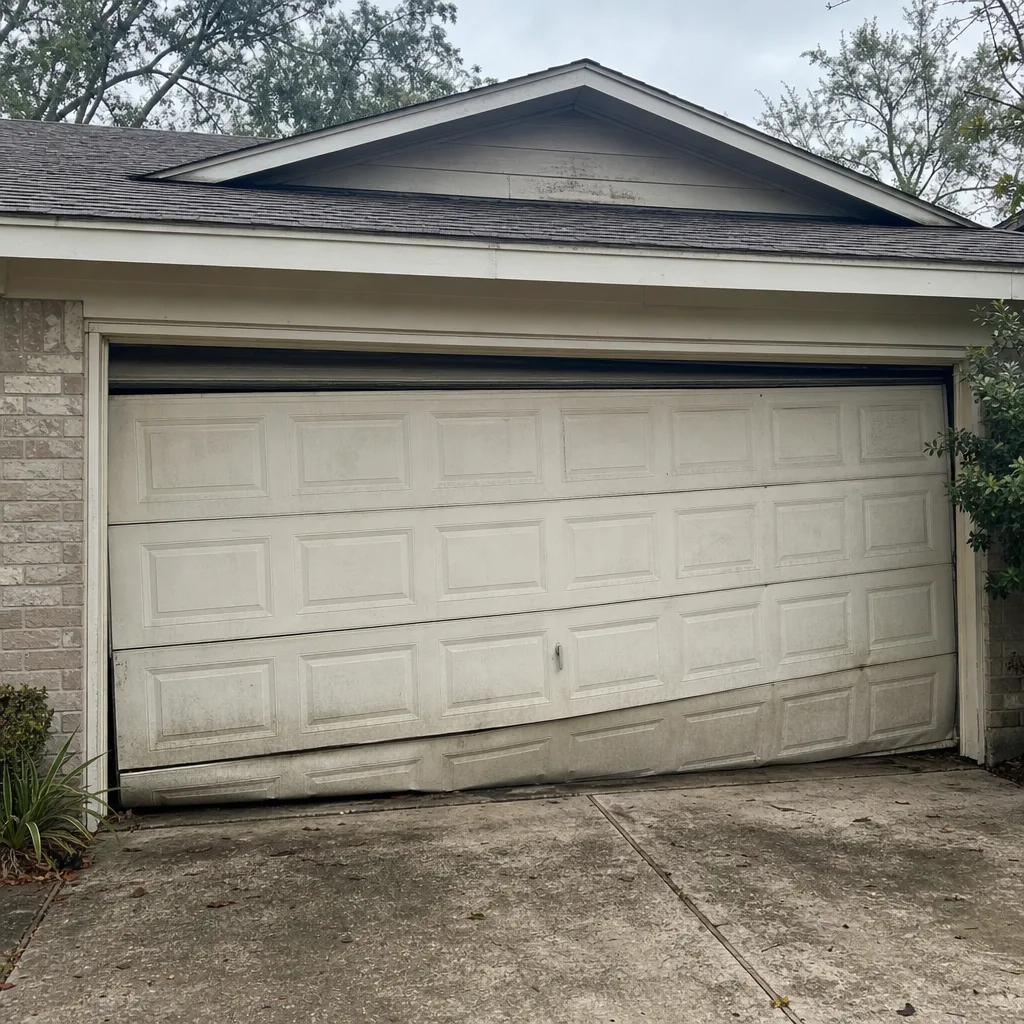 Before
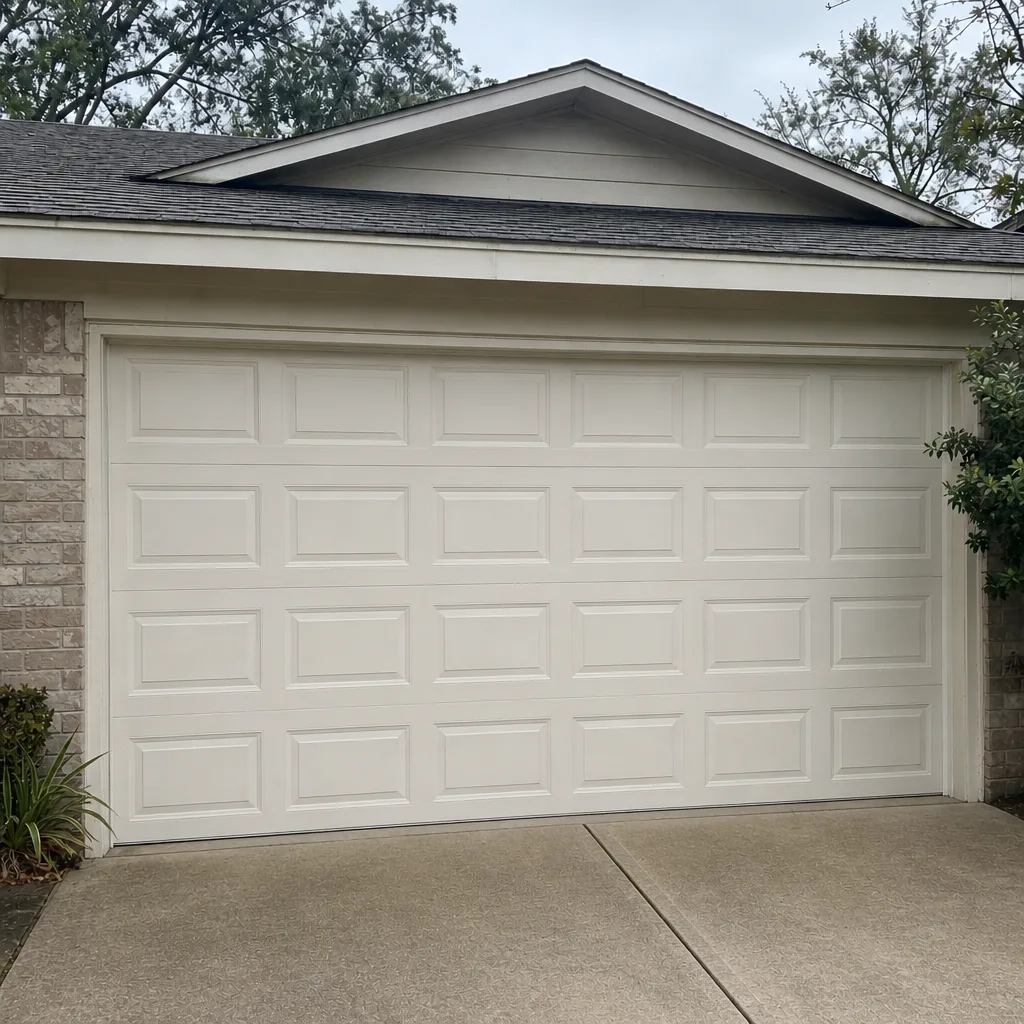 After
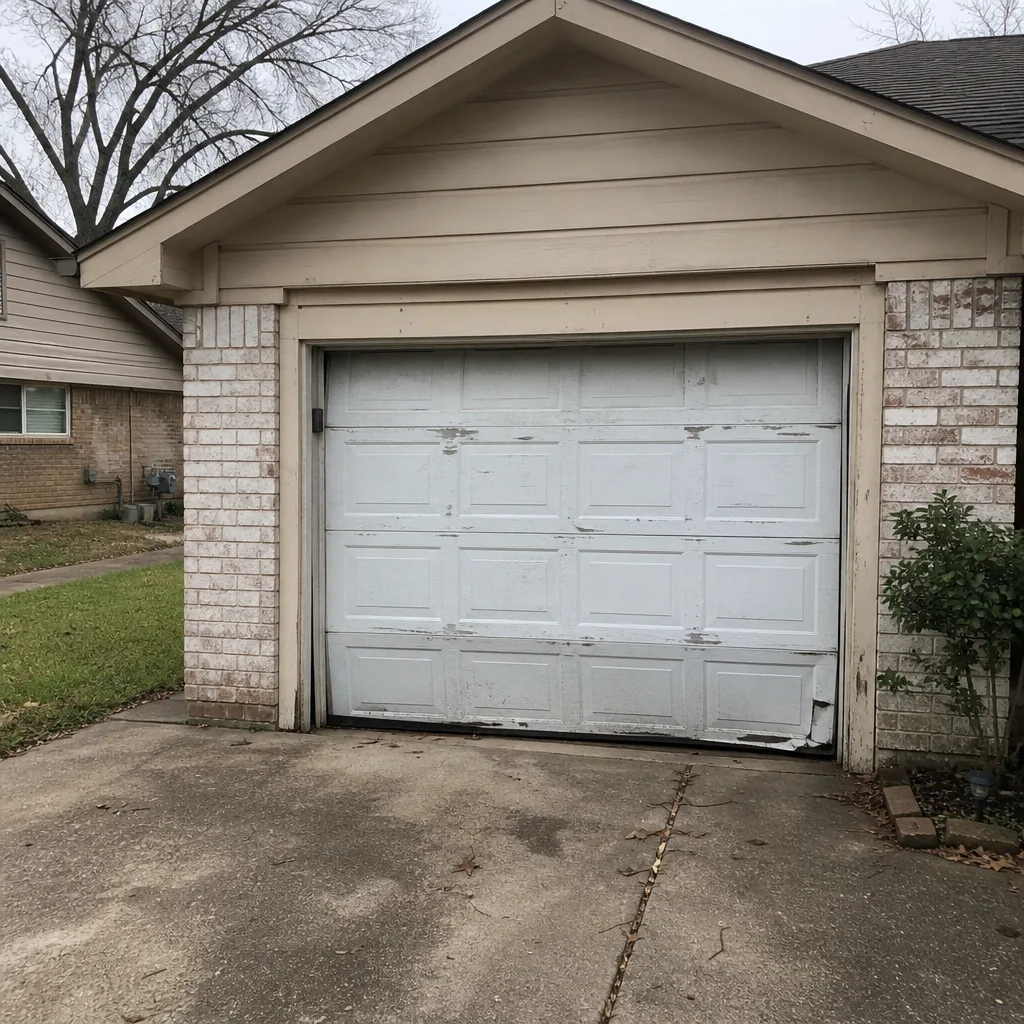 Before
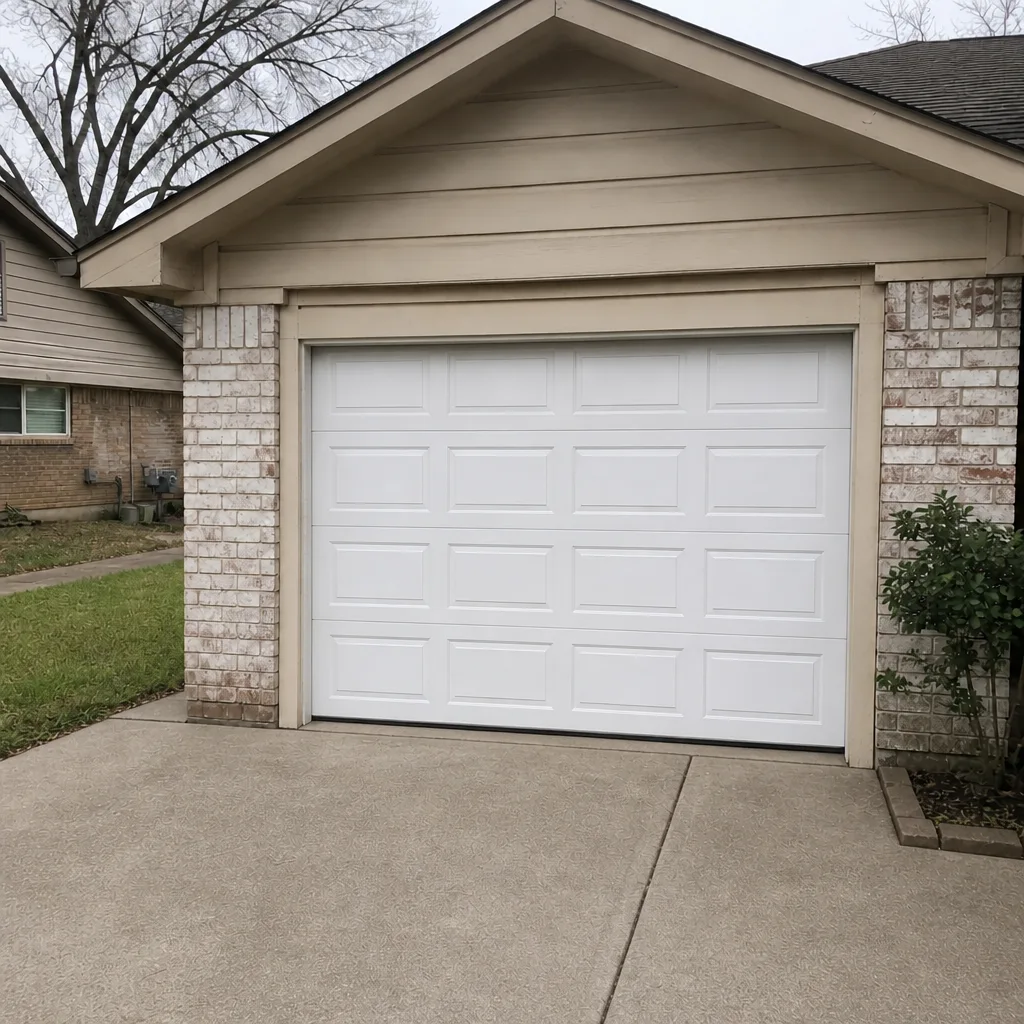 After
When to Call a Professional
Lubrication, sensor cleaning, hardware checks, and visual spring inspection are all things a careful homeowner can handle. Call a professional when the door needs repairs. That includes a visible gap in a torsion or stretch spring, a door that won’t stay up or goes up crooked, an opener that hums but doesn’t move the door, a bent track, or a sensor that won’t hold alignment after re-aiming. If your door is stuck open and your home is exposed, that’s an emergency call. If you’re simply not sure what you’re looking at, that’s reason enough to have it checked: our technicians have up to 11 years of experience and will tell you what’s actually wrong, not what sounds good for the invoice. Sugar Land Garage Door Repair Co offers free estimates in Sugar Land, and you can reach us at (833) 509-3010 for a free estimate.
Frequently Asked Questions
At minimum, do the sensor and safety checks monthly, lubrication twice a year, and spring and seal inspections quarterly. The humidity and heat here wear hardware faster than in cooler climates, so more frequent checks pay off. Call (833) 509-3010 for an exact quote if you’d rather have a professional handle it, with free estimates.
A door that opens but won’t close is almost always a safety sensor issue: misaligned, dirty, or blocked lenses. The logic board sees an interrupted beam and reverses the door on purpose. Wipe the lenses, check for steady indicator lights on both units, and clear the area between them. If it still won’t close, call (833) 509-3010 for a free estimate and let a technician track down the sensor or wiring.
No, white lithium isn’t the best choice for this climate. In Sugar Land heat, it thins out above 95°F, migrates off the hinge points, and collects grit. Use a garage door lubricant rated for high temperatures on hinges and rollers, and keep the track clean and dry. If you’re unsure which product suits your door, call (833) 509-3010 for advice and a free estimate.
You can’t know with certainty, but you can watch for signs: a visible gap in the coil, a crooked door, a loud bang, or a door that the opener can’t lift. If you see any of those, stop using the door and call for a professional inspection. Never touch a spring yourself. Call (833) 509-3010 for a free estimate with a trained spring specialist.
A south-facing door in Sugar Land usually needs its bottom seal replaced sooner than a shaded one, because full-day sun dries and cracks the rubber. Inspect it quarterly and replace it when it’s stiff, torn, or letting daylight through. Call (833) 509-3010 for a free estimate on seal replacement.
Before a storm, check for daylight around the closed door, test the safety reverse, clear the sensor path, clean the tracks, and confirm the manual release works. Anything pressed against the door should come away. If the door won’t close reliably or a spring looks suspect, get it fixed before the weather arrives. Call (833) 509-3010 for a free estimate.
The Bottom Line
Most garage door failures in Sugar Land come down to four things: misaligned sensors, the wrong lubricant for the heat, springs that were meant to be serviced by a pro, and seals worn out by the sun. Put those items on a calendar, inspect carefully, and stop trying to handle anything involving a spring yourself. The rest of the checklist is a few minutes a month that keeps you out of the emergency call line. When a repair is beyond the checklist, we can help with garage door spring repair, opener work, and doors that need replacing; we service virtually every major brand and diagnose the problem correctly the first time.
If your door needs attention now, call Sugar Land Garage Door Repair Co at (833) 509-3010 for a free estimate. We’ll look at the actual system, tell you what’s wrong, and give you a clear price before any work begins.
Written by the team at Sugar Land Garage Door Repair Co.